


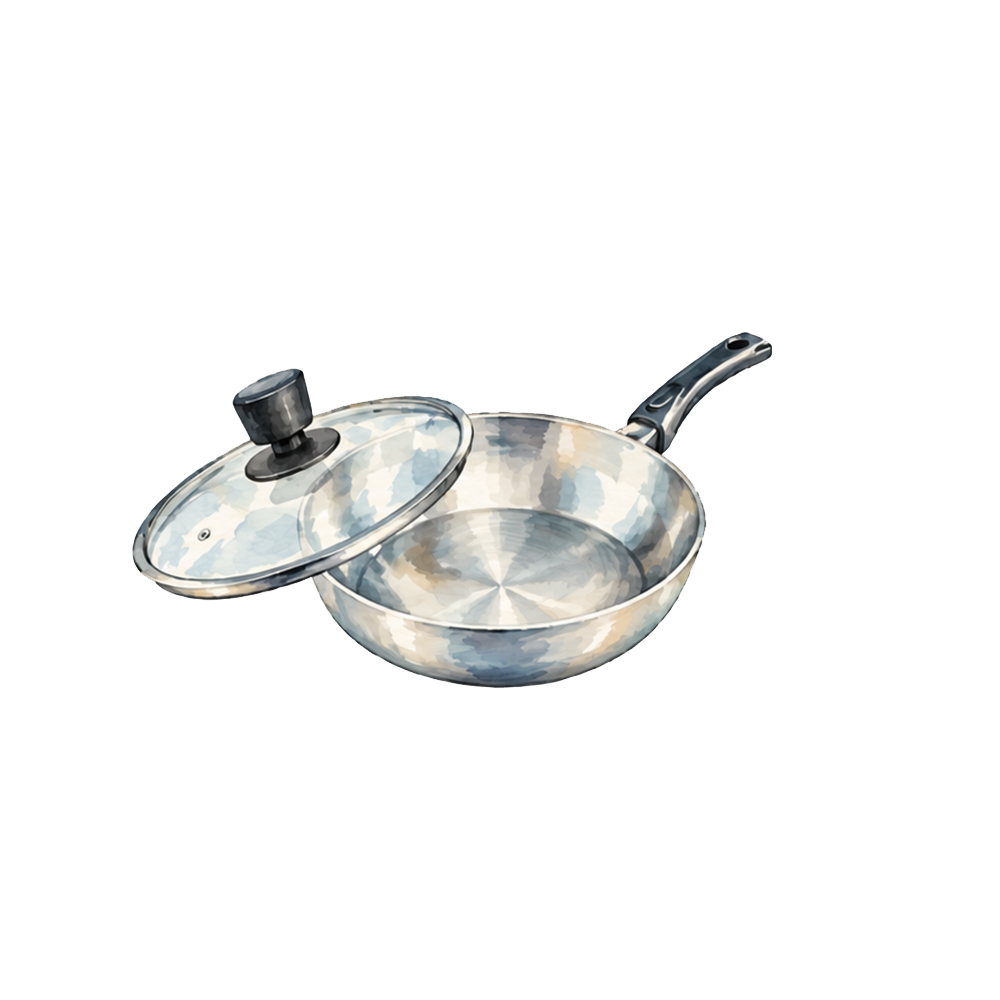
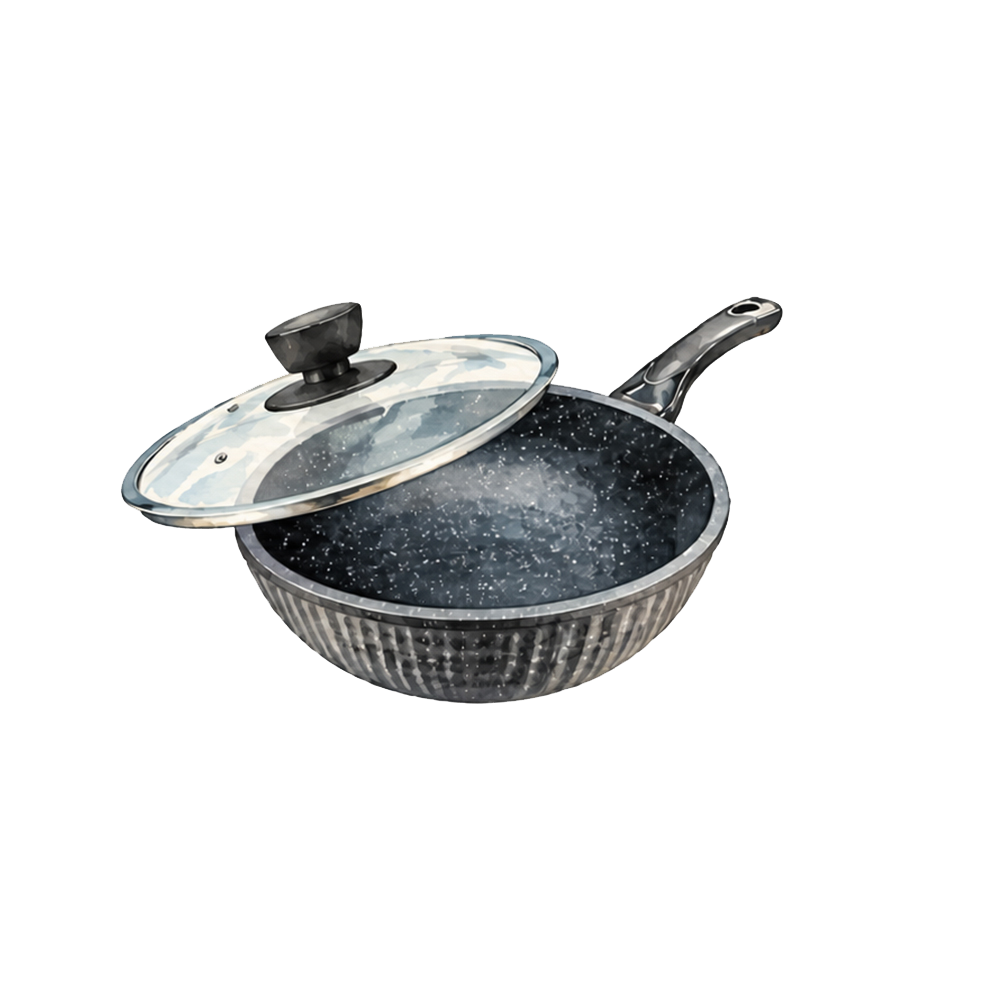

When Should You Replace a Non-Stick Pan?
Stop using the pan and evaluate replacement if any of these four signs appear:
1. Peeling or deep scratches in the coating. If both sides of the pan are scratched or peeling, or the metal base is visible, stop using and replace the pan.
2. Warping, cracks or bubbling. A warped bottom, cracks in the pan or bubbles in the coating mean the pan can no longer perform properly.
3. Significant loss of non-stick performance. If food such as eggs or fish sticks severely even when oil is used correctly and the condition does not improve after cleaning, the coating performance has clearly declined.
4. Difficult to clean or unstable during use. Replace the pan if the surface stays rough, burnt residue is difficult to remove, or the pan cannot sit steadily on the stovetop.
Important: Non-stick pans do not have one fixed service life. Frequency of use, heat level and cleaning method all affect durability. Follow the product instructions and inspect the pan regularly. If dropped, deformation or damage may not be visible; do not use the pan if you cannot confirm that it is safe.
To extend service life, avoid heating an empty pan at high temperature, use wooden or silicone utensils, and clean with a soft sponge.